If you’re a cosmetic bottle supplier like me, you’ve probably fielded a dozen questions a week from clients about packaging regulations—and honestly, I don’t blame them. A few years back, I thought selling high-quality, leak-proof, on-brand bottles was all that mattered. Then we had a run-in with a small brand that got fined $12,000 because their luxury serum bottles missed a critical ingredient disclosure line. That mistake wasn’t about the bottle’s design—it was about missing a key regulatory check we didn’t know we needed to prioritize. Since then, I’ve dug into cosmetic packaging rules across major markets, talked to brand owners who’ve stumbled, and worked to build compliance right into every bottle we supply. What follows is the stuff I wish I’d known when I started out: not just vague rules, but the concrete, actionable regulations that matter for your cosmetic bottle packaging. Cosmetic Bottle
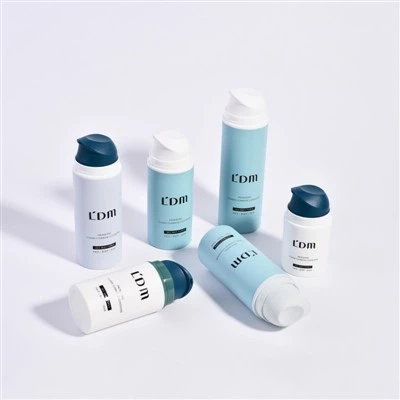
First, let’s start with the foundation: the global baseline. The big three markets for most cosmetic brands are the European Union, the United States, and Canada, each with their own unique set of rules, and they don’t always align. The EU’s Cosmetics Regulation (EC) No 1223/2009 is the gold standard for transparency here. For packaging, that means two non-negotiables: every bottle (and its label) must display the brand’s responsible person’s full name, address, and a unique product identifier. The unique identifier isn’t a random barcode—it’s a traceability number that lets regulators track the product all the way from manufacturing to sale. I learned this the hard way when a client’s Australian brand (exporting to the EU) tried to skip the unique ID; their shipment got held at Rotterdam port for 10 days, costing them a week of prime season sales. Also, the EU bans any packaging that’s “misleading” about the product’s contents. For example, a pump bottle labeled “30ml serum” can’t hold 25ml of product—even if the pump’s priming process siphons off a tiny amount of liquid before use. Regulators test empty and filled packaging to check net content, so we now print a small note on every bottle’s base with the exact net fill volume, to avoid any accidental misrepresentation.
Then there’s the U.S. market, governed by the FDA’s Cosmetic Labeling Regulations. Unlike food or drugs, cosmetics don’t need pre-approval before hitting shelves, but the FDA holds brands responsible for safe products and truthful labeling. For packaging, two rules stand out: the “net quantity of contents” standard and ingredient labeling. The net quantity rule requires that every bottle (or its label) clearly states how much product is inside, using the standard units: fluid ounces, milliliters, or both. The tricky part here is the “packaging and contents” test—if a brand uses a fancy, bulky bottle to make a small 1oz moisturizer look bigger, the FDA can flag that as misleading. That’s why we offer both sleek, compact bottles and slightly larger base bottles for brands who want to avoid that perception issue. The other big U.S. rule is ingredient listing: every ingredient, in descending order of concentration, must be listed on the packaging or a secondary label attached to the bottle. We always remind clients to include that secondary label space when designing bottles—we even leave a 1-inch blank area on our standard screw-cap bottles for that, so they don’t have to redesign the whole package last minute. Oh, and one often-overlooked FDA rule: if a bottle is made with a plastic that leaches chemicals (like certain types of PVC for liquid products), the FDA requires testing for chemical migration. We only work with food-safe, cosmetic-grade plastics that pass those migration tests, so our clients never have to worry about that.
Canada’s Cosmetic Regulations, updated in 2021, brought a lot of new rules to the table, especially for packaging related to safety and consumer information. Unlike the U.S. or EU, Canada mandates a “lot number” on every cosmetic bottle—this is a production batch number that lets brands trace products back to a specific manufacturing run if there’s a recall. We now laser-etched lot numbers on every bottle’s base, not just the carton, because we’ve seen brands lose their ability to trace products when only cartons had lot numbers. Another Canada-specific rule: if a cosmetic is labeled for use on children under 3 years old, the packaging must include a “child-resistant closure” unless the brand can prove the closure isn’t necessary. That’s a big one for baby skin care brands—we have a full line of child-resistant pump bottles and flip-top caps designed specifically for that market, so we can skip the hassle of retrofitting.
Now, let’s talk about less common but equally important regulations: regional rules for emerging markets like Southeast Asia, Brazil, and South Korea. Many global brands forget these when expanding, but they’re make-or-break for local sales. For example, South Korea’s Korea Food & Drug Administration (KFDA) requires that all cosmetic bottles for skin care products include a “period after opening” (PAO) symbol—those little open-jar icons with a number inside, like “12M” meaning 12 months. We used to get pushback from brands who thought the icon was clunky, but after a client’s shipment to Seoul got rejected for missing it, we now add the PAO symbol as a standard feature on all our bottles shipped to South Korea. Brazil’s National Health Surveillance Agency (ANVISA) has a rule about packaging material sustainability: they require that 50% of plastic cosmetic packaging is recyclable or made from post-consumer recycled (PCR) plastic. For clients targeting Brazil, we stock PCR plastic bottles in popular sizes, so they don’t have to wait for custom production.
Beyond regulatory rules, there’s the “green” angle that’s become tightly tied to packaging compliance in many markets. The EU’s Circular Economy Action Plan, for example, bans single-use plastics for many cosmetic products by 2027, so brands are shifting to refillable bottles. I’ve had several clients ask about this lately, and we now offer a line of refillable glass and aluminum bottles with interchangeable caps, so brands can meet those upcoming rules. Also, in the U.S., some states (like California and New York) have their own plastic waste laws that require packaging to be easily recyclable. We design our plastic bottles with minimal, label-friendly shapes and no tricky multi-material parts (like a plastic cap glued to a metal ring) that make recycling hard. That’s not just good for compliance—it’s what our clients’ customers expect now.
I know it can feel overwhelming—keeping up with rules that change every year, varying between countries, and often being buried in long regulatory documents. But here’s the thing: compliance shouldn’t be an afterthought. It should be part of your packaging’s design from the first sketch. When we work with a new client, the first thing we do is ask where they’re selling, then build all required features into the bottle. For a brand targeting the EU, we add the responsible person’s address line to the mold; for Canada, we etch the lot number at the factory; for Brazil, we use PCR plastic. That way, the client doesn’t have to pay for last-minute modifications or face shipment delays.
Last year, a small clean beauty brand reached out to us because their previous supplier had sold them bottles missing the FDA’s net content label. They’d already printed 5,000 labels, and reprinting would have cost them $8,000 and delayed their launch. We worked with them to modify our standard bottles to add the required label space in 48 hours, for a fraction of that cost, and added the lot numbers for free since they were expanding to Canada. That’s the kind of support we offer—because we know that when a brand succeeds, we succeed.

If you’re a brand owner or someone looking to source compliant cosmetic bottles, don’t wait until you hit a regulatory snag. We can help you navigate the rules for your target markets, design bottles that meet all requirements, and even test for compliance if needed. Reach out to us to discuss your cosmetic packaging needs, no matter how big or small.
Cosmetic Bottle References:
- European Commission. (2009). Cosmetics Regulation (EC) No 1223/2009.
- U.S. Food and Drug Administration. (2023). Cosmetic Labeling Guide.
- Health Canada. (2021). Cosmetic Regulations: Amendments and Guidance.
- Korea Food & Drug Administration. (2022). Cosmetic Packaging Safety Standards.
- Brazil National Health Surveillance Agency (ANVISA). (2023). Circular Economy Requirements for Cosmetic Packaging.
- European Commission. (2020). Circular Economy Action Plan: Single-Use Plastics Targets.
Shaoxing Longderm Plastic Co., Ltd.
Shaoxing Longderm Plastic Co., Ltd. is one of the leading cosmetic bottle manufacturers and suppliers in China. We warmly welcome you to wholesale custom made cosmetic bottle from our factory. For more cheap products, contact us now.
Address: No. 55, Tongmingnan’an Road, Yuxian Village, Fenghui Town, Shangyu District
E-mail: hello@ldmpac.com
WebSite: https://www.ldmpackaging.com/
