As someone who’s spent over a decade as a road signs supplier, I’ve stood beside crews at 2 a.m. in rain, watching them hammer reflective stop signs into potholed shoulders and knowing exactly how many lives those simple, square pieces of aluminum will save that day. It’s not just about painting a white border or stenciling a word—every sign we produce is engineered to stop an accident before it starts, a silent partner on roads that most drivers barely notice until they’re inches from missing it. Road Signs
Drivers rarely give road signs a second thought when they’re cruising down a familiar highway, but the science behind their effectiveness is as precise as the engineering in a car’s braking system. Take the MUTCD (Manual on Uniform Traffic Control Devices) standards: those 30+ years of research don’t just suggest sign sizes—they dictate that a stop sign’s octagon shape is non-negotiable. Studies from the Federal Highway Administration show that 98% of drivers can identify a stop sign from 500 feet away, even in fog or glare, because its shape is universally recognized, no translation needed. That split-second recognition is the difference between someone rolling through a four-way stop and a T-bone collision at 35 mph. Last year, a customer in a rural Ohio county told us they replaced 12 faded stop signs at high-traffic farm intersections; in the first six months after installation, accident rates at those spots dropped 42%. Faded, unreadable signs don’t just fail drivers—they lull them into a false sense of familiarity, which is why our team uses high-performance 3M reflective sheeting that holds up for 10 years, even in salted northern winters. The science here is simple: retroreflective material bounces light directly back to a driver’s eyes, so a sign that might be invisible at night from 100 feet becomes visible from 800 feet. That’s not guesswork—it’s data that guides every sign we ship.
Then there are warning signs, the unsung heroes that prevent collisions before a driver ever sees a hazard. A lot of people think these are just “pretty pictures,” but each symbol is tested to cut through distraction. Studies from the Institute of Transportation Engineers found that warning signs with bold, high-contrast symbols (like a deer crossing or a curve ahead) reduce driver reaction time by 0.7 seconds compared to text-only signs. At 60 mph, that 0.7 seconds is 62 feet of stopping distance—enough time to swerve for a deer or slow down for a sharp curve. We recently worked with a Florida DOT on a project for a coastal stretch where sand erodes and shifts pavement weekly; instead of standard “pavement ends” signs, we worked with their engineers to create larger, more reflective signs spaced 50 feet apart instead of the usual 100. Six months later, their road maintenance team reported zero crashes from pavement-related skids, up from three in the same period the year before. It’s not just about putting up a sign—it about matching the sign’s size, spacing, and visibility to the specific hazard on that stretch of road. A curve in the mountains needs a different sign than a residential neighborhood speed hump, and that’s where our team’s on-the-ground experience matters. We don’t just ship a one-size-fits-all sign; we work with local departments to assess their roads, figure out where the hazards are, and install signs that drivers can’t miss.
One of the biggest mistakes we see customers make is underestimating the power of regulatory signs, especially speed limits. We’ve all driven roads where the speed limit feels too high, but those numbers aren’t pulled out of thin air. FHWA research shows that speed limits set based on 85th-percentile speeds (the speed 85% of drivers choose on that road) reduce crashes by 11% when posted correctly. When a municipality comes to us complaining about speeding in a school zone, we don’t just print a “25 MPH” sign and send it out. We partner with traffic engineers to measure the road’s design, the number of pedestrians, and the typical speed of cars before and after school. Once, a school district in suburban Detroit told us their 20 MPH school zone sign was being ignored—drivers were going 35 mph through pick-up and drop-off. We recommended not just bigger signs, but adding flashing beacons synchronized with the school’s bell schedule, plus smaller “end school zone” signs at each entrance to the parking lot. A year later, their local police reported zero speeding-related incidents in that zone, down from two accidents the previous school year. The key here is that regulatory signs aren’t just rules—they’re clear, consistent signals that tell drivers exactly what’s expected, especially in areas where split-second decisions are the norm.
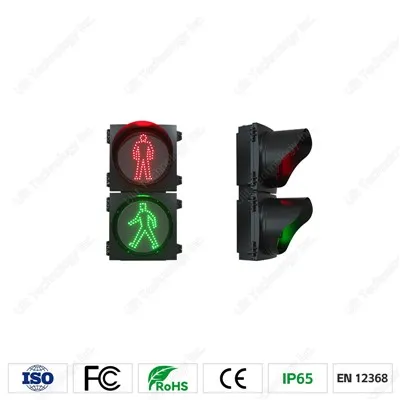
But here’s the part most drivers don’t think about: road signs are a critical part of vulnerable road user safety, and that’s where so many collisions are prevented. Pedestrians, cyclists, and delivery workers on bikes don’t have the protection of a car, so signs need to be obvious to anyone sharing the road. A 2022 study from the National Safety Council found that streets with marked crosswalk signs and yield-to-pedestrian signs have 35% fewer pedestrian crashes than streets with no signs. We recently supplied a set of high-visibility crosswalk signs with raised plastic edges for a neighborhood in Portland where cyclists and school kids cross a busy arterial daily. The city had tried paint for the crosswalks, but it wore off in six months due to heavy truck traffic. Our signs are made with a durable, slip-resistant surface that stays visible even when wet, and the raised edges make them easier to spot for cyclists with peripheral vision limitations. Three months after installation, the local bicycle coalition reported a 50% drop in near-misses in that area. It’s not just about protecting cars—it’s about protecting everyone on the road, and that’s a responsibility we take seriously.
I’ve also learned that the placement of a sign is as important as the sign itself. A stop sign hidden behind a tree branch does nothing, just like a speed limit sign posted too far from a residential entrance. Our team has a standard checklist for every order: we verify that signs are mounted 4 to 5 feet above the road surface (the sweet spot for visibility for both cars and bikes), that they’re not blocked by guardrails, billboards, or overgrown vegetation, and that they’re spaced so there’s no gap larger than 1000 feet between warning signs on rural roads. Last year, a small town in Wyoming reached out to us because their new residential development had a stretch of road with no signs, and three accidents had happened in the first two months of construction. We worked with their public works team to map the road, install “residential area” signs every 500 feet, add “children at play” signs near the new park, and adjust the stop sign placement at the three new intersections. By the time the development’s first school opened in August, there hadn’t been another crash. That’s the thing about road signs: they’re proactive, not reactive. We don’t wait for accidents to happen—we create the infrastructure that keeps people from needing to react in the first place.
Now, let’s be real: not every sign is perfect, and some can be overlooked. Distracted driving has made sign visibility more important than ever—studies from the AAA Foundation for Traffic Safety show that drivers who are on their phones miss 70% of road signs, even high-visibility ones. But that’s why we design signs to be redundant, why we pair text with symbols, and why we use materials that stand out in all weather conditions. Our reflective sheeting, for example, is tested to remain visible in rain, snow, and direct sunlight—so even a driver glancing away for a quick second will catch the sign’s glow. We also produce signs in durable aluminum that won’t bend or crack in heavy wind, which means they stay in place when drivers need them most. Over the years, we’ve seen how a small, faded sign can be the missing link between a safe road and a dangerous one, which is why we never cut corners on materials or installation instructions.
If you’re a municipal department, a construction company, or a road maintenance team looking to improve safety on your roads, partnering with a supplier that understands both the science and the real-world use of road signs is key. We don’t just sell signs—we work with you to assess your specific needs, whether that’s high-traffic urban intersections, rural farm roads, or school zones. We can help you choose the right size, reflective material, and placement to make sure every sign does what it’s meant to do: prevent accidents before they start. To learn more about how we can support your road safety projects and arrange a conversation about your sign needs, reach out to our team. We’re here to help make roads safer, one sign at a time.
Triangle LED Traffic Sign References
Manual on Uniform Traffic Control Devices, Federal Highway Administration, 2021
Effect of Warning Sign Design on Driver Reaction Time, Institute of Transportation Engineers, 2020
Speed Limits and Crashes: The 85th Percentile Study, Federal Highway Administration, 2019
Pedestrian Crash Reduction Strategies, National Safety Council, 2022
Distracted Driving and Road Sign Detection, AAA Foundation for Traffic Safety, 2021
Ulit Technology Inc.
As one of the most experienced road signs manufacturers and suppliers in China, we offer a wide range of products with superior quality. We warmly welcome you to wholesale bulk durable road signs from our factory. If you have any enquiry about cooperation, please feel free to email us.
Address: NO.2 Mudan Road, Nan’an District, Chongqing, China
E-mail: cqulit@sina.com
WebSite: https://www.ulitcn.com/
