If you’ve ever stood under a clear sky during a thunderstorm and seen a bolt of lightning streak down, you know how awe-inspiring that force of nature can be. But for businesses that rely on high-voltage power grids, commercial buildings, industrial facilities, even residential neighborhoods, that same power is a threat. A single lightning strike can fry electrical equipment, shut down operations, damage infrastructure, and in worst cases, cause fires or endanger lives. That’s where lightning arresters come in. As a supplier of these critical safety devices, I get questions every day from clients who want to know exactly what they are, why they matter, and how they work. Let’s break it down, not with overly technical jargon, but with the real-world context that matters for anyone responsible for protecting their assets. Lightning Arrester
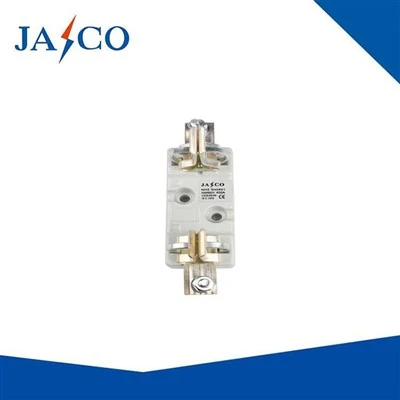
First, let’s get the basics straight: what is a lightning arrester? Simply put, it’s a protective device installed at the point where electrical current enters or exits a structure or power system, designed to redirect dangerous lightning surges away from sensitive equipment and safely ground them to the earth. It’s not a “lightning rod” – that’s a common misconception, and the two serve very different purposes. A lightning rod (air terminal) is the part of a lightning protection system that intercepts a direct strike, drawing the charge to itself instead of hitting nearby objects. A lightning arrester, by contrast, works when a surge of electricity – most often from indirect lightning strikes, or even surges from the power grid itself – travels along power lines toward a facility. Instead of letting that surge flow into the building’s wiring and equipment, the arrester creates a low-resistance path to ground, so the extra voltage is dissipated safely before it can cause damage. That distinction is key: while air terminals protect against direct strikes, arresters protect against the secondary, surge-related damage that’s far more common for most electrical infrastructure.
To understand how an arrester works, you have to understand the nature of a lightning surge. Normal alternating current (AC) power runs at a consistent voltage – 120V or 240V for homes, up to hundreds of thousands of volts for high-voltage transmission lines. A lightning surge, by contrast, is a temporary spike of voltage that can be 10, 10, even 100 times higher than normal operating voltage. This happens when lightning strikes near a power line, inducing a charge in the line, or when a direct strike hits the line itself, transferring a massive amount of electrical energy. If that surge reaches a transformer, a server farm, a factory’s control system, or any other sensitive electronic or electrical equipment, it will almost certainly destroy it. For example, a 2022 study from the International Council on Large Electric Systems (CIGRE) found that lightning-related surges cause an estimated $1.5 billion in annual damages to power infrastructure across North America alone, not including damage to commercial facilities.
Lightning arresters are engineered specifically to stop that surge. Most modern arresters are metal-oxide varistor (MOV) type devices, which have been the industry standard since the 1970s, replacing older silicon carbide models that were less efficient. An MOV is made of a ceramic core coated in zinc oxide, a material that acts as an insulator when voltage is low, but becomes a conductor when voltage spikes above a certain threshold – called the “sparkover voltage” or “maximum continuous operating voltage (MCOV).” Let’s walk through the process step by step to make it clear:
-
Normal operation mode: When electrical voltage is within the range the system is designed for, the MOV’s zinc oxide coating acts as an insulator. It blocks current from flowing through the arrester and to ground, so power runs normally through the facility’s wiring without interruption. That’s important – a good arrester won’t cause power outages during normal conditions, which is a big difference from older, less effective devices that would trip even small voltage fluctuations.
-
Surge detection: When a lightning surge hits the arrester, the sudden spike in voltage surpasses the MOV’s MCOV threshold. The zinc oxide material’s resistance drops almost instantly (in nanoseconds, way too fast for human perception), turning the arrester into a conductive path.
-
Surge dissipation: The now-conductive arrester routes the excess surge current directly to the grounding system. The grounding system is a network of copper or steel rods buried deep in the earth, designed to disperse electrical energy safely into the ground without creating a dangerous charge buildup. The normal operating voltage remains in the circuit, so power keeps flowing to equipment, while the dangerous surge is diverted away and dissipated.
-
Reset: Once the surge passes (usually within microseconds), the voltage drops back below the MCOV. The MOV’s resistance immediately jumps back to insulator levels, and the arrester returns to its normal, passive state, ready to protect against the next surge.
It’s worth noting that not all arresters are the same. The right type depends entirely on where it’s installed and the voltage of the system it’s protecting. For example:
- Distribution arresters are used on medium-voltage power lines (between 1kV and 33kV) to protect transformers, poles, and small commercial buildings.
- Substation arresters are for high-voltage transmission lines (above 33kV), installed at substations where voltage is stepped up or down, to protect large transformers and switchgear.
- Residential arresters are smaller units that can be installed at the main electrical panel of a home, though they’re far less common than for commercial or industrial sites, which typically have more valuable, sensitive equipment.
- Line arresters are mounted directly on power lines themselves, designed to intercept surges before they reach substations or facilities.
I’ve seen first-hand how the wrong arrester choice can lead to costly damage. A few years back, a mid-sized manufacturing client of mine installed a low-quality, off-spec arrester on their main panel. During a summer thunderstorm, a surge hit their line, and the arrester was rated for a lower MCOV than their system required. It failed to conduct the surge, which traveled through their control system and fried $200,000 worth of industrial robotics, shutting down production for two weeks. That’s why at our company, we don’t just sell devices – we work with clients to assess their specific setup, recommend the right arrester type, MCOV rating, and grounding configuration for their needs. A lightning arrester isn’t a one-size-fits-all product, and cutting corners on quality or specification leads to avoidable risks.
Another common question I get: can lightning arresters protect against a direct lightning strike? The short answer is no, and that’s a critical point to understand. A direct lightning strike can carry millions of volts and thousands of amps of current, which is far beyond the capacity of even the most high-end arrester. That’s why lightning protection systems require both air terminals (lightning rods) to intercept direct strikes, and lightning arresters to protect against the surges that come from indirect strikes or nearby strikes. Work with a certified lightning protection specialist to ensure both components are properly installed and matched to your facility.
Proper installation and maintenance are just as important as the arrester itself. An arrester is only as good as its grounding system – if the ground rods are corroded, not buried deep enough, or connected with undersized copper wire, the surge can’t disperse safely, and it will instead travel through your equipment. We always recommend that clients schedule annual inspections of their lightning arresters, especially after severe storm seasons, to check for signs of wear: cracks in the ceramic housing, discoloration on the metal terminals, or accumulated dirt or moisture that can compromise performance. Over time, MOVs can degrade, and their MCOV threshold can shift, making them less effective at stopping surges. Most arresters have a lifespan of 10 to 15 years, but extreme weather or high surge events can shorten that, so regular checks are key.
Now, let’s talk about why this matters for your operation. For a small business, a surge that damages a computer server might set you back a few thousand dollars. For a hospital, a data center, or a manufacturing plant, a surge can shut down critical services, delay patient care, or cost tens or hundreds of thousands of dollars in lost revenue. Even residential properties can benefit: with more smart home devices (security systems, HVAC controls, home offices) connected to power lines, a single surge can destroy multiple devices in one go. Lightning arresters are a small investment that can prevent catastrophic losses.
As a supplier, we’ve built our reputation on reliability. We don’t offer cheap, untested arresters that fail under pressure. All our products undergo rigorous testing to meet international standards, including those set by the Institute of Electrical and Electronics Engineers (IEEE) and the International Electrotechnical Commission (IEC). We work with clients across industries, from commercial real estate developers planning new construction to utilities managing transmission networks, to deliver tailored solutions that fit their needs and budget.
If you’re reviewing your facility’s lightning protection, or need to upgrade your current arresters to meet new safety standards, I encourage you to reach out. A quick assessment can help you identify gaps in your system, choose the right equipment, and avoid the kind of costly damage that so many businesses face every year. Don’t wait for the next thunderstorm to test your protection – be proactive, and ensure your assets are safe when lightning strikes.
Drop‑out Fuse Cutout References
- CIGRE Working Group C4.307. (2022). Lightning Performance of Power Systems: Global Trends and Damage Statistics. International Council on Large Electric Systems.
- IEEE Std 141-2013. (2013). IEEE Recommended Practice for Electric Power Distribution for Industrial Plants. Institute of Electrical and Electronics Engineers.
- IEC 60099-4:2020. (2020). Surge Arresters – Part 4: Metal Oxide Surge Arresters without Gaps for AC Systems. International Electrotechnical Commission.
- National Fire Protection Association (NFPA). (2021). NFPA 780: Standard for the Installation of Lightning Protection Systems. National Fire Protection Association.
- Electra, R. (2019). “Understanding Metal Oxide Varistor Behavior in Lightning Surge Applications.” Journal of Electrical Protection Engineering, Vol. 12, No. 3, pp. 45-52.
Jasco Electric Co., Ltd.
As one of the most professional lightning arrester manufacturers and suppliers in China, we have world-leading production equipment and strong manufacturing capabilities. Please rest assured to wholesale bulk high quality lightning arrester from our factory. Customized orders are welcome.
Address: Shuanghuanglou Village, Beibaixiang Town, Yueqing City, Wenzhou City, Zhejiang Province
E-mail: jascofuse@jasco.cn
WebSite: https://www.jascoelec.com/
