As a supplier of multi-function meters, I get this question all the time from electricians, building managers, and even fellow engineers who are new to power distribution equipment. “Can a multi function meter measure frequency?” It’s a straightforward question, but the answer isn’t always as simple as a yes or no—especially since I’ve seen a lot of confusion between what a multi-function meter actually does, and how frequency measurement fits into its core features. Let me break this down the way I explain it to customers who call our shop looking for the right meter for their job. Multi Function Meter
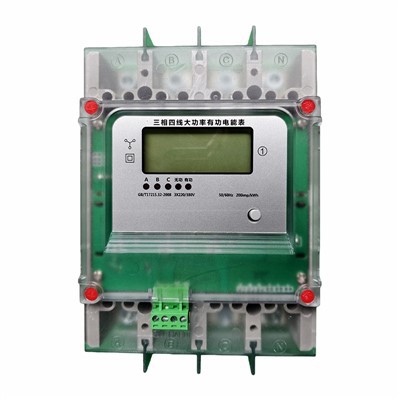
First, let’s start with what a multi-function meter is, at its core. When I first got into this industry 12 years ago, multi-function meters were basically evolved versions of the old analog wattmeters we used in factories back then. Back in the day, if you wanted to measure voltage, current, power factor, and frequency, you had to buy four separate devices: a voltmeter, an ammeter, a power factor meter, and a frequency counter. That meant running four sets of wires, calibrating each one separately, and troubleshooting when one device went down. Now, a multi-function meter condenses all those measurements into one compact unit—mounts right in your switchgear panel, connects to your main power lines, and spits out real-time data on every key power parameter you need.
But here’s where the frequency question comes in. A lot of people assume “multi-function” means every possible power measurement, but that’s not always the case. Early multi-function meters, manufactured between the 1990s and mid-2000s, often skipped frequency measurement to keep costs down. Those models were built for commercial buildings where most grid power runs at a steady 50Hz or 60Hz, so frequency variation was rarely a concern. But over the past 15 years, as renewable energy has exploded and industrial facilities have adopted more variable speed drives, solar inverters, and battery storage systems, frequency stability has become way more critical. That’s why modern multi-function meters now almost always include frequency measurement as a standard feature—but it’s still worth checking, because there are still budget models out there that omit it.
Now, how does a multi-function meter actually measure frequency? Let’s get a little technical here, but I’ll keep it plain. Frequency is the number of cycles per second in an AC power signal, right? Standard grid power is 50Hz in most of the world, 60Hz in North America and parts of South America. When a power system’s frequency drifts even a little—say, 1Hz above or below the standard—it can mess up equipment: motors run too fast or too slow, clocks lose time, inverters disconnect, even whole-grid stability suffers.
To measure frequency, a multi-function meter uses something called a zero-crossing detector. Here’s how that works: the AC voltage signal from your power lines moves between positive and negative, crossing zero volts twice per cycle. The meter counts the time between two consecutive zero crossings (the period of the waveform) and then calculates frequency by dividing 1 by that period. It’s not perfect, but for most applications, it’s accurate to within 0.01Hz—way more than enough for commercial and industrial use. Some high-end models also use digital signal processing (DSP) to filter out noise from electrical equipment, which makes their frequency measurements even more reliable, especially in environments with lots of variable loads.
I’ve seen first-hand how important that frequency accuracy is. Last year, we had a customer who runs a food processing plant call us in a panic. Their existing multi-function meter had an old model that didn’t measure frequency, and their line of high-speed mixing motors was starting to burn out every few months. Turns out, their on-site generator was running 3Hz below 60Hz because of a faulty governor, and the motors were running at 95% of their rated speed, putting extra strain on the windings. The old meter only showed voltage and current, so no one noticed the frequency drift until a technician noticed the clock in the control room was running slow (clocks rely on 60Hz to keep time, remember). We swapped their old meter with one of our multi-function meters that includes frequency measurement, and that issue never came back. That’s the kind of scenario where knowing your meter can measure frequency literally saves you thousands in equipment repairs and downtime.
But wait—there’s a catch here. Not all multi-function meters measure frequency the same way, and some have limitations. For example, if you’re dealing with non-sinusoidal waveforms—common with variable speed drives, LED lighting, or solar inverters—some lower-end meters might struggle to accurately measure frequency. Those zero-crossing detectors I mentioned earlier can get confused by distorted waveforms, which have extra voltage spikes that cross zero more often, leading to inaccurate readings. Higher-quality multi-function meters use DSP algorithms to ignore those spikes and focus on the fundamental frequency of the signal, which is the actual frequency your equipment cares about. That’s why when we work with industrial customers, I always recommend a meter with DSP capability if they’re working with modern power equipment.
Another point: some people confuse multi-function meters with power quality analyzers, which are a different product entirely. A power quality analyzer measures a lot more than frequency—voltage sags, swells, harmonics, transients, all that stuff. But modern multi-function meters do include basic power quality features, including frequency monitoring, so they’re a good middle ground between a basic meter and a full analyzer. If your main goal is to track frequency to catch drift or generator issues, a multi-function meter will do the job, and it’s way cheaper and easier to install than a power quality analyzer.
Let me also address a common misconception: some users think that because their meter measures current and voltage, it can automatically calculate frequency. No, that’s not how it works. Frequency is a separate measurement that requires dedicated circuitry. If your multi-function meter doesn’t have that circuitry, it won’t measure frequency, no matter how much data it pulls on other parameters. That’s why when a customer comes to me asking, “Does your multi-function meter measure frequency?” the first thing I tell them is, “Check the model specs. If it lists ‘frequency’ as a measured parameter, then yes. If it doesn’t, you’ll need to either upgrade or pair it with a separate frequency counter.”
Now, let’s talk about use cases where frequency measurement from a multi-function meter is non-negotiable. First, any facility with on-site power generation—generators, backup power systems, or combined heat and power (CHP) units. Generators need to run at exactly the right frequency to sync with the grid or power equipment, so a multi-function meter with frequency measurement lets operators adjust the governor in real time to keep it stable. Second, renewable energy systems: solar and wind inverters have to match the grid frequency to feed power back in, so monitoring frequency helps prevent the inverter from disconnecting during grid fluctuations. Third, industrial facilities with high-precision equipment—like the food processing plant I mentioned earlier, or a factory with CNC machines that rely on consistent frequency to run accurately. Even small frequency drifts can throw off CNC cuts or cause motor damage, so tracking it with a multi-function meter is a smart investment.
I should also mention that some regions have regulations that require frequency monitoring for commercial and industrial facilities. For example, in the European Union, grid codes require certain types of power users to monitor frequency to support grid stability. A multi-function meter that measures frequency helps you stay compliant without adding extra equipment.
Now, what about accuracy and installation? When you’re choosing a multi-function meter for frequency measurement, look for models with an accuracy rating of at least ±0.05Hz. Anything less than that might not be reliable enough for critical applications. Installation is straightforward too: most multi-function meters connect to the voltage lines (usually phase-to-phase or phase-to-neutral) and current transformers (CTs) for current measurements, and the frequency measurement uses the same voltage input, so no extra wiring is needed. That’s a big plus compared to installing a separate frequency counter, which would require another set of wires and a separate panel mount.
I’ve had customers who tried to cut corners by buying a cheap multi-function meter from a discount supplier, only to find out it doesn’t measure frequency. Last month, a small business owner called us because their old meter couldn’t detect that their backup generator was running too slow during a power outage. They thought their power was working fine, but the frequency drift was damaging their office equipment’s power supplies. It cost them more to replace their equipment than it would have to buy a reliable multi-function meter with frequency measurement in the first place. That’s why I always tell customers: don’t skimp on the features you need, especially when it comes to something as critical as frequency.
Another thing to note: some multi-function meters can also log frequency data over time. That’s a huge feature for preventive maintenance. You can track frequency trends over weeks or months, spot small drifts before they become big problems, and schedule maintenance on generators or inverters when you see consistent deviations. Instead of reacting to a breakdown, you can be proactive, which saves even more money on downtime.
So, to circle back to the original question: Can a multi-function meter measure frequency? The short answer is yes, but not all of them can. It’s a feature you need to look for in the specs. If you’re working with a standard grid-connected system, any modern multi-function meter will have it. If you’re working with non-linear loads like variable speed drives, make sure you get a model with DSP to ensure accurate frequency measurements. And if you’re running a generator or renewable system, frequency measurement is almost non-negotiable to keep your equipment and power supply stable.
As a supplier, I’ve seen firsthand how the right multi-function meter can solve so many power-related headaches. The ones that include frequency measurement aren’t just more convenient—they’re a critical tool for keeping operations running smoothly, whether you’re a small retail store, a manufacturing plant, or a farm with backup power. If you’re not sure which multi-function meter is right for your needs, don’t hesitate to reach out. I can walk you through the specs, explain the differences between models, and help you pick one that fits your budget and your requirements. No pushy sales tactics, just honest advice from someone who’s been in this industry long enough to know what works and what doesn’t.
If you’re in the market for a multi-function meter that can measure frequency, or you have other questions about power monitoring equipment, reach out to our team to discuss your specific needs. We offer a range of models for every application, from small commercial buildings to large industrial facilities, and we’re happy to help you find the right fit.
Prepaid Energy Meter References
- "Power Quality Measurement: Frequency and Harmonics," IEEE Standards Association, 2020.
- "Multi-Function Meters: Features and Applications," Schneider Electric Industrial Division, 2021.
- "Frequency Stability in Power Systems," North American Electric Reliability Corporation (NERC), 2019.
- "Zero-Crossing Detection for AC Frequency Measurement," International Journal of Electrical Engineering Education, Vol. 56, No. 3, 2019.
- "Renewable Integration and Power Frequency Monitoring," Solar Power World Magazine, 2022.
Zhejiang Qunte New Energy Technology Co., Ltd.
As one of the most professional multi function meter manufacturers in China, we’re featured by quality products and good price. Please rest assured to buy discount multi function meter made in China here from our factory. We also accept customized orders.
Address: No. 56, Fengxi Road, Tang’ao Yu Village, Liushi Town, Yueqing City, Wenzhou City, Zhejiang Province
E-mail: 251951196@qq.com
WebSite: https://www.zjqtmeter.com/
