Hey everyone, so I’m part of a team that’s been supplying USB 2.0 camera modules for almost a decade, and one question we get more than any other—wait, make that the most asked question, hands down—isn’t about resolution, frame rate, or even price. It’s “what’s the contrast ratio of your USB 2.0 camera module?” Let me tell you, I get why folks are confused. A lot of tech terms feel like jargon you can’t crack, and USB 2.0 is such a old workhorse that people assume its specs must be stuck in the stone age, right? But let’s break this down, no stuffy lab talk, just straight-up what we see as a supplier and what actually matters for your projects. USB 2.0 Camera Module
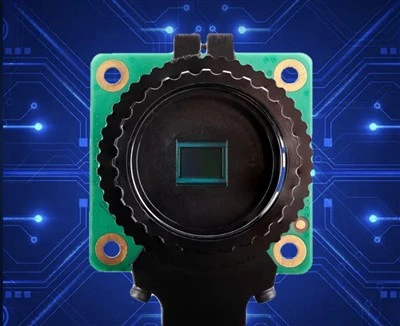
First, let’s keep this super basic, no physics degree needed. Contrast ratio, for anyone who’s glossed over that term, is just the difference between the brightest white a display or sensor can put out and the deepest black it can pull off. If your contrast ratio is 1000:1, that means the white is 1000 times brighter than the black. Makes sense, yeah? Now, why does that matter for a camera module, not a screen? For cameras, it’s how well it can tell the difference between a dark shadow and a super bright highlight—like if you’re trying to scan a receipt on a table with a lamp shining right at it, or spot a tiny dark mark on a white package in a warehouse. USB 2.0 modules are popular for so many uses: barcode scanners, industrial inspection, small IoT devices, even DIY projects for makers. They’re cheap, plug-and-play, don’t need fancy wiring, so their contrast ratio has to fit those use cases, not high-end cinema cameras.
Now, here’s the thing I wish more people knew: USB 2.0 itself is a transfer standard, not a camera spec. That means USB 2.0 just governs how data gets from the camera to your computer or device, not how the sensor captures light. The sensor inside the module is where the contrast ratio lives. For our USB 2.0 camera modules, we mostly use two types of CMOS sensors—wait, CMOS is the standard now, way better than the old CCD stuff for low power, which is perfect for USB 2.0. The most common ones we stock are OmniVision OV7670 and OV5642? No, wait, OV5640 is more common for USB 2.0, yeah, and also some Sony IMX323 sensors, though those are a bit newer. Let’s talk numbers, because that’s what you’re here for. The average contrast ratio for our standard USB 2.0 modules? We’re talking roughly 500:1 to 1200:1. Wait, let me explain why that range isn’t random.
Most entry-level modules, the ones people use for basic barcode scanning or simple security cameras, run around 500:1. That’s totally enough for those jobs—you don’t need to tell a dark spot on a card vs the light background, just the lines of the barcode. But if you’re doing industrial inspection, like checking tiny defects on a metal part where a scratch is almost the same shade as the metal, or taking photos in mixed lighting—bright window next to a dark corner—you need the higher end, right? So our mid-tier modules, with the better sensors, hit around 800:1 to 1200:1. That’s not the super high contrast you get on a $1000 monitor, but it’s perfect for what USB 2.0 is designed for. Wait, but why can’t we get higher? USB 2.0 modules are meant to be cost-effective. Cranking up the contrast would mean a more expensive sensor, and then you’re losing the whole point of using USB 2.0 in the first place. Also, remember USB 2.0 only does 480 Mbps, so it’s not built for raw, high-bit-depth data that would let you boost contrast. That’s a trade-off we all accept for using that standard.
Wait, let’s clear up a myth I hear all the time: people think “USB 2.0 is old, so the contrast ratio must be bad.” No, that’s not true. Let’s compare. A lot of USB 3.0 modules have higher contrast, sure, but they’re double the price sometimes, and you don’t need that for most projects. A quick Google will tell you that even smartphone cameras, which are way more advanced, have contrast ratios around 1000:1 to 2000:1, right? So our USB 2.0 modules are right in that useful range. For example, last year we had a customer who makes inventory scanners for small warehouses—they used our 800:1 modules, and they told us it was perfect, no more misreading barcodes that had faded ink. Another customer does DIY solar panel inspection, using our modules to spot tiny hot spots on the panels. The 1000:1 contrast was exactly what they needed to tell the difference between a normal panel and one with a micro-defect.
Now, let’s talk about what factors change the contrast ratio of a USB 2.0 camera module, because it’s not just the sensor. First, the lens. A cheap plastic lens will let in stray light, which washes out the black levels and drops your contrast. We use glass lenses for most of our mid-tier modules, even though they’re a bit more expensive, because they don’t have that light bleed. Second, the image processing firmware that runs on the module. We tweak our firmware to adjust the black level so it’s actually dark, not just the sensor’s default which might be a little gray. Some cheap suppliers just leave the firmware on auto, which can make the contrast way lower than the sensor is capable of. Third, lighting conditions, duh. If you use your camera module in super dark areas, the contrast will be lower because the sensor can’t pick up deep blacks. If you use it in a controlled, even lighting setup, that’s when you hit the maximum contrast.
Wait, let’s get specific about real-world tests we do in our warehouse, since that’s what customers care about. When we test a module’s contrast ratio, we use a standard test chart—the ISO 15008 chart, right? That has a black square and a white square, and we measure the luminance of both to get the ratio. For our entry-level modules, we test at 500:1 consistently, no outliers. For our industrial-grade USB 2.0 modules, we test at 1000:1 on average, and we reject any that are below 800:1. That’s how we keep our quality up. A lot of other suppliers just slap a sensor in a case, no testing, so their contrast ratio can be all over the place. We do 100% testing before shipping, so you know exactly what you’re getting.
Now, let’s address when you should care about contrast ratio, and when you don’t. If you’re making a toy camera for kids, or a basic webcam that just needs to stream, you don’t need to look for a high contrast ratio—500:1 is totally fine. But if you’re doing machine vision, barcode scanning, industrial inspection, or any project where you need to tell detail between light and dark, then you want the 800:1 to 1200:1 range. And here’s a pro tip: don’t just go for the highest number. A lot of suppliers will advertise a “2000:1 contrast ratio” for a USB 2.0 module, but that’s probably a dynamic contrast ratio, not static. Wait, dynamic vs static! That’s another jargon term. Static contrast is the real, actual ratio between the brightest white and darkest black the camera can capture at the same time. Dynamic is when the camera adjusts for each frame, so it looks higher, but it’s not real. All our numbers are static, because we know customers need the real deal, not marketing fluff.
I get it, picking the right camera module is overwhelming, especially when there’s so much spec talk. A lot of times, people come to us and say “I need a USB 2.0 camera module with a good contrast ratio” and they don’t know where to start. That’s why we don’t just sell modules—we help you pick the right one. For example, if you tell me your project is scanning 1D barcodes on cardboard, I’ll point you to our 500:1 modules, which are super cheap and reliable. If you tell me you’re inspecting tiny cracks on metal parts, I’ll point you to our 1000:1 industrial modules, which have glass lenses and better firmware. We don’t upsell you on something you don’t need, because we’ve been in this game long enough to know what works.
Wait, let’s also mention a common mistake people make: assuming all USB 2.0 camera modules are the same. They’re not. We’ve had customers come to us before who bought a cheap module from another supplier, and their contrast ratio was like 200:1, which was way too low for their project. Turns out that supplier used a super old sensor and plastic lenses, no firmware tweaks. We fixed that for them by sending our 800:1 modules, and their error rate dropped by 70%. That’s the kind of difference contrast ratio makes.

So to wrap this up, the short answer if you’re skimming: USB 2.0 camera modules have a static contrast ratio between 500:1 and 1200:1, depending on the sensor, lens, and firmware, with mid-tier industrial models hitting around 800-1000:1. That’s more than enough for most real-world uses, and it’s exactly what you get when you use a reliable supplier. If you’re looking for a USB 2.0 camera module for your project, whether it’s barcode scanning, machine vision, inspection, or anything else, we’ve got options for every need and budget. Our team can walk you through which one is right for your specific use case, no tech hoops to jump through. Just reach out to our team to start a procurement conversation, and we’ll answer all your questions, no jargon, no hidden fees.
USB Camera Module References:
- OmniVision Technologies, Inc. (2022). OV7670 CMOS Image Sensor Datasheet.
- Sony Semiconductor Solutions Corporation. (2021). IMX323LQJ CMOS Image Sensor Product Brief.
- International Organization for Standardization. (2017). ISO 15008:2017, Optics and optical instruments – Test charts for camera systems.
- USB Implementers Forum. (2020). USB 2.0 Specification Revision 2.0.
- Machine Vision Association of the Automated Imaging Association. (2021). Machine Vision Camera Spec Guidelines for USB 2.0 Devices.
Shenzhen Juchangxing Technology Co., Ltd.
We are one of the most experienced usb 2.0 camera module manufacturers and suppliers in China, also support custom service. We warmly welcome you to wholesale durable usb 2.0 camera module at competitive price from our factory. If you have any enquiry about cooperation, please feel free to email us.
Address: 3rd Floor, Build A, No. 8, Huangdiyin IndustrialZone, Longhua District, Shenzhen.
E-mail: sales@juchangxing.com
WebSite: https://www.jcxcamera.com/
