As an IO Trigger Line supplier, I’ve spent the last 12 years working alongside engineers, facility managers, and automation specialists to solve the messy, real-world problems that come with choosing the wrong trigger line. I’ve been in rooms where a production line shut down mid-shift because someone picked a line rated for indoor dry conditions for an outdoor warehouse loading dock, costing a small manufacturer $40,000 in lost output before 9 a.m. I’ve also helped a medical device lab upgrade their testing setup last quarter, where a tiny mismatch in trigger line pulse width risked skewing critical clinical trial data—something that could have delayed a life-saving device by months. That’s why this topic isn’t just a technical checklist; it’s about matching a component to the job so it works, not just checking a box. IO Trigger Line
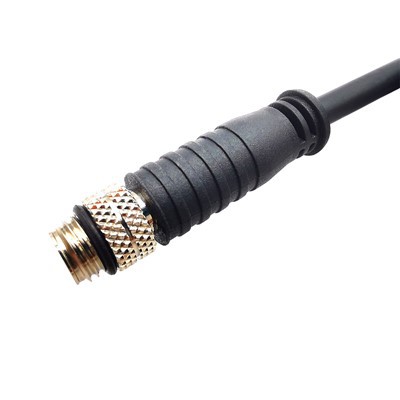
When someone first reaches out to us asking how to select an IO Trigger Line for their application, I start with three non-negotiable questions that cut through the industry jargon. No matter if you’re testing semiconductor wafers, controlling a robotic pick-and-place, or monitoring a water treatment sensor, these three questions will narrow down every option so you don’t overspend on features you’ll never use or skimp on specs that will make your system fail. Let’s break them down, with real examples from projects we’ve supported, so you can apply this logic to your own work.
First, you need to map out the electrical and signal requirements of your system. This isn’t just about “voltage” — it’s about the whole signal path: how much current your device will draw through the trigger line, what pulse width you need to trigger your load, and whether you need single-ended or differential signaling. Let’s take semiconductor wafer probe testing, a use case I worked on with a team at a leading chip manufacturer last year. Their probe station required a trigger line that could send a 100-nanosecond pulse at 5 volts, with zero signal distortion over a 2-meter length, because any delay or overshoot would throw off their wafer level yield calculations. If they’d picked a standard consumer-grade IO trigger line rated for 1-volt signals, that 100ns pulse would have stretched to 150ns by the time it reached the probe, leading them to discard 2% of good wafers unnecessarily. For this application, we recommended our high-speed differential trigger lines, which are designed to cancel out electromagnetic interference (EMI) and maintain tight pulse timing. For comparison, if you’re running a basic digital input for a industrial motor start signal that only needs a 1-millisecond pulse at 24 volts, a low-cost single-ended trigger line would work perfectly — no need to pay for the high-speed EMI shielding. The key here is to measure your minimum required signal specs, not the maximum your system can handle, to avoid overspecification.
The second critical question is environmental and mechanical operating conditions. This is where most people make the mistake of ignoring harsh conditions until it’s too late. I still remember a call from a food and beverage manufacturer in the Midwest two winters ago. They’d installed a set of standard trigger lines to control their canning line’s fill valves, located in a partially unheated warehouse where temperatures dropped to -10°F in the winter. Within three months, all the lines had cracked and stopped conducting, because standard PVC insulation becomes brittle at sub-zero temperatures. They’d used lines rated for indoor ambient temperatures, not the actual conditions in their space. For their setup, we recommended our low-temperature rated trigger lines with cross-linked polyethylene (XLPE) insulation, which stays flexible and conductive down to -40°F, and added a UV-resistant jacket for the summer months when that same warehouse would hit 105°F. Other environmental factors to consider include exposure to chemicals (like the caustic cleaners common in pharmaceutical or food processing facilities), humidity (saltwater in marine applications can cor copper conductors if the line has poor corrosion resistance), and mechanical stress: will the line be routed around sharp edges, pulled through cable trays, or subjected to constant flexing (like in robotic arms)? For robotic pick-and-place applications, we use our flex-rated trigger lines with stranded tin-plated copper conductors, which can withstand over 10 million flex cycles without breaking — compared to solid-core lines that fail after just a few thousand bends. If you’re installing lines in a control panel, where they’ll be secured and not moved, a solid-core line is fine, but for moving parts, flex rating is non-negotiable.
The third question is integration and scalability, which is often overlooked until you need to expand your system. I recently spoke to a startup that built a custom automated test system for battery packs. They started with 8 IO channels using a basic trigger line, but six months later, they had to add 12 more channels to test a new battery model. The original lines they picked used proprietary connectors that cost twice as much as standard ones, and the company couldn’t source replacement connectors quickly when they had a line fail mid-test. We switched them to our standard M12 connector trigger lines, which are compatible with most industrial control systems, easy to source globally, and allow for hot-swapping — so if a line fails, they can replace it in 30 seconds instead of waiting for a custom part to ship. Scalability also includes future-proofing: if your system is likely to grow by 20-30% in the next two years, pick a trigger line that works with standard protocols (like Ethernet/IP, Modbus, or Profinet) instead of a custom line that will become obsolete when you upgrade your controller. For small, fixed systems, a custom line might be cheaper upfront, but for any system that’s expected to evolve, standardization will save you thousands in the long run.
Beyond these three core questions, there are a few edge cases that come up regularly, and it’s important to account for them. First, EMI and noise immunity. If your trigger line is running near power cables, motors, or high-frequency equipment (like in a factory floor or near radio frequency sources), even a small amount of EMI can cause a false trigger or missed signal. For these applications, we recommend shielded trigger lines: foil shield for lower frequency noise (up to 100MHz) or braided shield for higher frequencies, plus a drain wire to ground the shield properly. A common mistake here is not grounding the shield at both ends, which can actually create a ground loop and introduce more noise than it blocks. Another edge case is safety and certification. If your application is in a regulated industry — medical devices, aerospace, or industrial control for life-critical systems — your trigger line needs to meet specific standards: UL for North America, CE for Europe, or IEC for global applications. We work closely with our customers in these sectors to provide documentation for every line, so they can pass audits without delays. For example, a medical device manufacturer testing implantable pacemakers needed trigger lines certified to IEC 60601 for medical electrical equipment, because any failure in the line could put a patient at risk. We supplied them with lines that had been tested to that standard, so their regulatory team didn’t have to perform extra, costly testing on our components.
Let’s walk through a real-world example to tie this all together. Last year, we supported a water treatment plant in the Southwest that needed trigger lines to control their pH sensor monitoring system. The plant is located in a desert climate, with temperatures ranging from 20°F in winter to 110°F in summer, high humidity, and exposure to chlorine-based chemicals used to treat the water. They also needed the trigger lines to send a 5-volt analog signal from the sensor to the control panel, over a 10-meter length, with a tolerance of less than 2% signal loss. They initially considered a low-cost single-ended PVC line, but when we asked about their environment, we pointed out that PVC would degrade from chlorine exposure, and single-ended signaling would be vulnerable to noise from the plant’s large pump motors. We recommended our chemical-resistant XLPE insulated trigger lines with a braided shield, differential signaling for noise immunity, and rated for -20°F to 120°F. The customer installed these lines, and after six months, they reported zero signal loss or degradation — a vast improvement from the old lines they’d used, which only lasted 18 months and required constant replacement. The total cost of our lines was 15% higher than the low-cost option, but the plant saved over $8,000 in replacement and maintenance costs in the first year.
At the end of the day, selecting the right IO Trigger Line isn’t about choosing the most expensive line on the market, or the cheapest. It’s about balancing your electrical needs, environmental conditions, and future requirements to pick a line that will perform reliably for the life of your system. If you’re still not sure which line is right for your application, or you want to talk through your specific project needs, our team of engineers is here to help. We don’t push the most expensive product; we work with you to find a solution that fits your budget and your performance requirements, no matter if you’re a small startup or a large industrial operation.
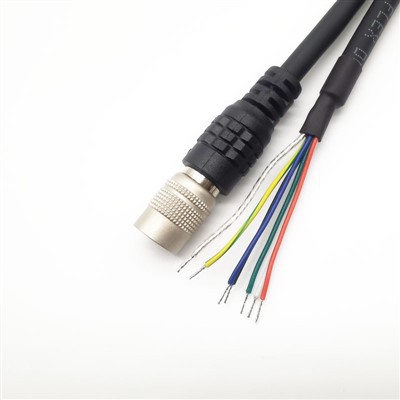
If you’re ready to discuss your upcoming project, or have questions about trigger line specs, feel free to reach out to our sales team to arrange a consultation. We’ll walk through your needs, provide sample lines for testing if needed, and help you avoid the costly mistakes that come with mismatched components.
Fiber Optic Cable References
- Industrial Communication Technology Foundation. (2021). IO Trigger Line Specification for Industrial Automation.
- Underwriters Laboratories. (2020). Standard for Safety for Industrial Control Equipment (UL 61010-1).
- International Electrotechnical Commission. (2019). Medical Electrical Equipment – Part 1: General Requirements for Basic Safety and Essential Performance (IEC 60601-1).
- Institute of Electrical and Electronics Engineers. (2022). Signal Integrity for High-Speed Digital Interconnects.
Karobert Technology LLC Karobert Trading PTE. LTD.
We’re known as one of the most professional io trigger line manufacturers and suppliers in China, also support customized service. Please feel free to buy high quality io trigger line made in China here from our factory. For price consultation, contact us.
Address: 6250 S 196th St, Kent, WA, 98055, USA.
E-mail: karl@karobert-us.com
WebSite: https://www.karobert-us.com/
