If you’ve ever found yourself squinting at a wetland, shoreline, or even a backyard bird feeder, trying to tell apart a tall, long-legged bird standing still or gliding low over the water, you’re not alone. For years, I’ve fielded this question from customers, birdwatchers, and even construction workers who spot one of these birds near my crane yards and ask, “Is that a crane or a heron?” As a crane supplier who’s spent half my life around these two distinct birds—because let’s be honest, cranes and herons share the same open spaces we use for heavy lifting equipment—this is a question that’s more than just bird trivia. It’s about understanding two very different creatures, and even how that translates to choosing the right tools for your job. Crane
Let’s start with the basics: cranes and herons are both in the group of birds called “waders,” meaning they wade through shallow water for food. But beyond that small overlap, they’re separated by millions of years of evolution, and the differences are almost impossible to miss once you know what to look for. First, take their necks. If you watch a heron standing still, or flying, you’ll notice it tucks its neck into an S-shape, pulling its head back toward its body. Cranes? Their necks are straight, even when they’re flying. I’ve seen this a hundred times: when a crane glides over our storage yard, its long neck stretches out like a flag, no bend at all. Herons, by contrast, look like they’re holding their head tight to their shoulders when they fly. That’s not a random quirk—it’s evolution at work. Herons hunt by striking fast at fish, frogs, and small prey from a stationary position, so tucking their neck keeps it out of the way until they’re ready to lunge. Cranes, on the other hand, are omnivores that forage on land and fly long distances during migration, so a straight neck is more efficient for both walking and long flights.
Next, their heads and bills. Cranes usually have bald patches on the tops of their heads, often bright red or orange—think of the sandhill cranes that frequent North American marshes, with that vivid red crown. Herons, by contrast, have feathers all over their heads, with long, thin, dagger-like bills perfect for spearing prey. Crane bills are shorter, thicker, and more chisel-shaped, designed for cracking seeds, digging up roots, and even eating small rodents. That’s a key difference if you’re trying to ID one in the wild: if the top of its head is smooth and bright, it’s almost certainly a crane. If it’s covered in feathers, and the bill looks like a sharp spear, it’s a heron.
Then there’s their behavior, which is where it ties back to my work as a crane supplier. Cranes are social, loud, and even musical. A group of cranes is called a “dance,” and during mating season, they do elaborate courtship dances—leaping, flapping their wings, tossing twigs in the air, all while making a loud, trumpeting call that can be heard for miles. Herons are far more solitary. You’ll almost never see a group of herons dancing or calling loudly; they prefer to hunt alone, standing motionless in the water for hours, striking only when prey passes by. That difference in behavior even translates to how they interact with human spaces: cranes are more adaptable to areas near humans, sometimes even stopping near construction sites to forage for grain, while herons stick strictly to wetlands and shorelines.
Now, let’s get to the part that matters most to you: how knowing the difference between cranes and herons applies to choosing the right lifting equipment. I’ve spent 20 years supplying cranes—mobile cranes, tower cranes, rough-terrain cranes, all built to handle specific jobs. Just like how cranes and herons are built for totally different lifestyles, our cranes are built for totally different tasks. A mobile crane is fast, agile, designed to move between job sites and lift heavy loads at a moment’s notice, just like a crane that flies long distances and forages across multiple habitats. A tower crane, used for high-rise construction, is tall, stable, built to lift heavy materials hundreds of feet into the air, matching the crane’s ability to soar over wetlands and cover large ranges. Herons, by contrast, are built for a single, specialized task: spearing prey in shallow water. If you tried to use a heron’s design for general foraging or long flight, it wouldn’t work. The same goes for equipment: you don’t use a compact mini-crane designed for small residential jobs to lift steel beams for a skyscraper, just like you wouldn’t mistake a heron’s specialized bill for a crane’s multi-purpose one.
I’ve seen this confusion lead to mistakes for customers, too. Last year, a small construction company came to me looking for a “heron lift” for their backyard patio project. I laughed and explained we supply cranes—not herons—and walked them through what size mobile crane would work for lifting their pre-cast concrete slabs. They’d seen a heron standing near their job site, and mixed up the term, which led to a wrong request. That’s why clear communication, whether it’s about birds or equipment, matters. Just as you need to know the difference between a crane and a heron to ID a bird, you need to know the difference between our crane models to pick the right one for your project.
Let’s clear up a few more common misconceptions, too. A lot of people think cranes and herons are closely related, but genetically, they’re not. Cranes are part of the Gruiformes order, which includes rails and coots, while herons are in Pelecaniformes, along with pelicans and ibises. That’s a big split—think of it like the difference between a dog and a cat, not just two types of pets. Their nesting habits are another big difference: cranes build large, flat nests on the ground or in shallow wetlands, with both parents taking turns incubating eggs and feeding the chicks. Herons build their nests in trees, often in large colonies called heronries, where hundreds of nests are packed together. Cranes raise their chicks (called colts) to be able to walk and forage within a day of hatching, while heron chicks are helpless for weeks, relying on both parents to bring them food.
What about size? It’s not a perfect rule, but cranes tend to be a bit larger overall. The whooping crane, one of the rarest birds in North America, can stand up to 5 feet tall with a 7-foot wingspan. A great blue heron, the most common large heron in North America, tops out around 4.5 feet tall with a 6.5-foot wingspan. But size isn’t the best ID—there are small herons, like the green heron, which is only 1.5 feet tall, and smaller cranes, like the sandhill crane that’s just a bit bigger than a small heron. So stick to neck shape, head feathers, and bill shape if you’re not sure.
I’ve watched these birds near my crane yards for decades, and I still get a kick out of seeing a crane glide low overhead, neck straight, trumpeting loudly, while a heron huddles in the wetland at the edge of the yard, motionless as a statue. They feel like a pair of symbols to me: cranes represent adaptability, movement, and strength, while herons represent patience, specialization, and stillness. Those are exactly the traits I look for when I’m sourcing cranes for my customers. A good crane needs to be strong enough to lift heavy loads, flexible enough to move between job sites, and reliable enough to get the job done, just like a wild crane has to be strong enough to migrate, flexible enough to forage for different food, and reliable enough to raise its young every year.
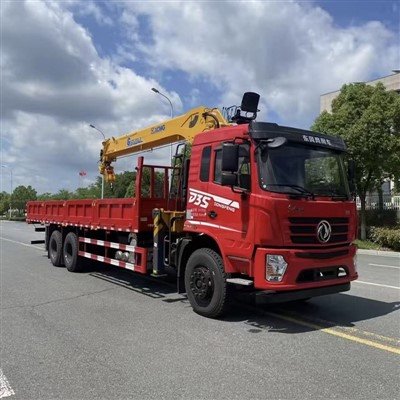
If you’re in the market for lifting equipment—whether it’s a mobile crane for a residential build, a rough-terrain crane for a remote construction site, or a tower crane for a high-rise project—let’s skip the bird mix-ups and talk about what you actually need. I’ve got a team of experts who can walk you through every model, explain the load capacity, reach, and safety features, and help you pick the perfect fit for your project. Just as I can tell a crane from a heron at 100 yards, my team can match you to the right crane for your job, no guesswork, no mistakes. Don’t settle for equipment that doesn’t fit your needs—reach out to us to talk through your project details, ask questions, and get a tailored quote.
Loader References:
- National Audubon Society. (n.d.). Crane Identification Guide. Retrieved from Audubon.org
- Cornell Lab of Ornithology. (n.d.). All About Birds: Cranes. Retrieved from AllAboutBirds.org
- Cornell Lab of Ornithology. (n.d.). All About Birds: Herons. Retrieved from AllAboutBirds.org
- International Organization for Standardization. (2021). Safety Standards for Mobile Cranes. Retrieved from ISO.org
- Crane Manufacturers Association of America. (2022). Equipment Specification Guide for Construction Cranes. Retrieved from CMAA.org
Jining Dafu Machinery Sales Co., Ltd.
As one of the most professional crane suppliers in China, we’re featured by quality products and low price. Please rest assured to wholesale bulk cheap crane from our factory. We also accept customized orders.
Address: Room 1-115, Building 7, Luxinan Auto Parts City, Qiantongdian Village, Quanpu Town, Liangshan County, Jining City, Shandong Province
E-mail: jiningdafu@163.com
WebSite: https://www.dafumachinery.com/
