If you’ve ever stood next to a humming distribution transformer on a utility pole or inside a small substation, you’ve probably wondered how those unassuming metal boxes keep the power flowing reliably, day in and day out. For me, that curiosity turned into a career of building and supplying distribution transformers, and over 12 years in this industry, the question I hear more than any other is: how do we cut the losses that eat into utility budgets and waste energy before it ever reaches a customer? Distribution Transformer
Distribution transformers are the unsung middlemen of the grid. They take the high-voltage power that travels hundreds of miles from a power plant, step it down to a safe, low-voltage level for homes and businesses, and operate around the clock—even when no one is using electricity. That constant work means they generate two types of losses: core losses (from the iron core’s magnetic resistance) and load losses (from current flowing through the winding wires). The U.S. Department of Energy estimates that these two types of losses account for roughly 1-2% of all electricity generated in the U.S., which adds up to tens of billions of dollars in wasted costs each year. For a utility, that’s not just a number—it’s money that could go to upgrading infrastructure, lowering customer bills, or expanding service to underserved areas.
As a transformer supplier, I don’t just sell units; I partner with utilities to solve their loss-related pain points. Over the years, I’ve worked on projects with small rural co-ops and large municipal utilities, and I’ve seen firsthand which strategies make the biggest difference. Let’s break down the science-backed, actionable steps that actually reduce distribution transformer losses.
Start with Core Losses: The Silent, Constant Drain
Core losses happen even when a transformer is carrying no load at all. They come from two phenomena in the transformer’s iron core: hysteresis and eddy currents. Hysteresis is the energy lost as the core’s magnetic field reverses direction with alternating current, and eddy currents are tiny loops of current that form in the core metal, generating heat that does no useful work.
The first and most effective way to cut core losses is to choose the right core material. For decades, transformers used standard silicon steel cores, but modern high-grade electrical steels—like grain-oriented silicon steel (GO steel) with a thinner, highly textured grain structure—reduce hysteresis losses by up to 30% compared to older materials. Even better, there’s amorphous metal, a non-crystalline alloy that cuts core losses by 70-80% compared to GO steel. I know what some of you are thinking: amorphous transformers cost more upfront. It’s true, but the math doesn’t lie. For a typical 50 kVA transformer in a rural area that operates at 70% load 24/7, the extra cost of an amorphous core unit pays for itself in energy savings in 5 to 7 years. For utilities with thousands of transformers, that adds up to massive long-term savings.
Another way to trim core losses is to optimize the core’s design. A lot of older transformers have solid cores or cores with thick steel laminations to reduce manufacturing costs, but thicker laminations mean bigger eddy currents. Modern cores use thinner, stacked laminations—usually 0.23 mm to 0.30 mm thick for GO steel, and even thinner for amorphous metal—to limit those eddy currents. We also use stepped cores instead of rectangular cores for larger units; stepped cores fit the windings more tightly, reduce the magnetic path length, and further cut down on hysteresis losses. I’ve seen utilities switch from rectangular to stepped core designs and reduce core losses by 12% on the same kVA rating.
Tackle Load Losses: The Variable Cost That Grows with Demand
Load losses are the losses you see when a transformer is carrying electricity to customers. They happen as current flows through the copper or aluminum windings, and they’re directly proportional to the square of the current—so if a transformer is carrying twice as much load, load losses quadruple. That makes load losses the biggest target for utilities that experience variable demand, like seasonal resorts or areas with growing residential populations.
The most straightforward fix here is to use higher-conductivity winding materials. Copper is 60% more conductive than aluminum, which means it generates less heat and has lower load losses. For small transformers (under 200 kVA), switching from aluminum to copper windings can cut load losses by up to 40%. Again, there’s a cost trade-off: copper is more expensive per kilogram, but for transformers that operate at high load most of the time, the energy savings add up fast. For example, a 100 kVA copper-wound transformer with 1.5 kW of load losses will save $1,300 a year in energy (at a grid average of $0.10 per kWh) compared to an aluminum unit with 2.5 kW of load losses—so if the copper unit costs $1,500 more upfront, it pays for itself in less than 14 months. That’s a no-brainer for most utilities.
Beyond material choice, optimizing winding design is key. The space between the two windings (the primary, which carries high voltage, and the secondary, which carries low voltage) creates what’s called leakage flux—magnetic energy that doesn’t contribute to power transfer and adds to load losses. Tightening the space between windings reduces leakage flux. We also use foil windings instead of round wire windings for larger units, especially for secondary windings. Foil windings have a larger surface area for current to flow through, reducing current density (and thus heat) by up to 20% compared to round wire. I worked on a project for a mid-sized utility in the Pacific Northwest a few years ago where switching from round to foil windings on 300 kVA transformers cut load losses by 18% and lowered their annual energy costs by over $20,000.
Right-Sizing: The Overlooked Loss That Plagues Utilities
Here’s a mistake I see all the time: utilities buying transformers that are too big for their load. A 150 kVA transformer running at 30% load is a waste, because core losses don’t decrease when load decreases—they’re constant. A transformer operating at less than 50% of its rated capacity can have a total efficiency 5-10% lower than a unit that’s properly sized for its load. It sounds small, but for a utility with 100 such transformers, that’s thousands of dollars in unnecessary losses each year.
Right-sizing starts with accurate load forecasting. Too many utilities use outdated load data from 10 years ago, before new housing developments or commercial buildings moved in, leading to over-sized transformers. Modern software tools can analyze historical energy use, growth projections, and even seasonal demand patterns to pick a transformer that matches the load. For example, a small commercial building that uses 80 kVA on average, with a peak load of 100 kVA, doesn’t need a 150 kVA transformer—it’s better off with a 100 kVA unit that operates closer to its peak efficiency. I recommend working with a supplier that can help you audit your existing transformer fleet and match units to actual load, not the theoretical maximum. We recently helped a municipal utility in Ohio audit 200 transformers and found that 40% were over-sized; swapping just 12 of them for properly rated units saved them $120,000 a year in energy costs.
Another part of right-sizing is taking advantage of load tap changers (LTCs) for larger transformers. LTCs let you adjust the transformer’s turns ratio to match varying grid voltage levels, which means you don’t have to run the transformer at a fixed, inefficient ratio. For transformers in areas with frequent voltage fluctuations—like near industrial facilities with heavy motor loads—LTCs can reduce both core and load losses by letting the unit operate at its optimal voltage range.
Maintenance: The Simple Step That Prevents Hidden Losses
Even the best-designed transformer will see increased losses if it’s not maintained regularly. A lot of utilities focus on replacing transformers when they fail, but small maintenance issues can add up to big losses over time. One of the most common issues is loose connections in the windings or terminals. Loose connections create high resistance, which generates heat and adds to load losses—sometimes as much as 10% higher than a properly torqued unit. A quick terminal inspection and torque check during routine maintenance can fix that.
Another maintenance task is testing and replacing insulating oil in oil-filled transformers. Over time, insulating oil breaks down, absorbs moisture, and develops impurities. That increases the core’s magnetic resistance, leading to higher core losses. Testing the oil’s dielectric strength every 2-3 years, and replacing it when it degrades, can cut core losses by up to 15% for older units. For dry-type transformers, regular cleaning of the cooling vents is key—dust and dirt buildup blocks airflow, causes overheating, and increases load losses by forcing the transformer to work harder to stay cool.
Choosing a Supplier That Prioritizes Loss Reduction
After 12 years in this business, the biggest mistake I see utilities make is picking a transformer based only on upfront cost, not long-term losses. A $1,000 cheaper transformer might save you money at first, but it could cost 2-3 times more in lost energy over its 25+ year lifespan. That’s why I focus on building transformers that balance upfront cost with low total losses, and that work with utilities to find custom solutions for their specific grid needs.
For example, some utilities have transformers in remote areas where they run at low load 24/7—for those, we recommend amorphous core transformers to cut core losses, even if the upfront cost is a bit higher. For utilities in dense urban areas with high peak demand, we prioritize copper windings and foil designs to reduce load losses. And for utilities with old, over-sized fleets, we help audit and replace underperforming units instead of buying all new transformers at once.
At the end of the day, reducing distribution transformer losses isn’t just about technical specs—it’s about partnering with someone who understands your unique challenges. I’ve had utilities tell me they thought cutting losses would require a complete grid overhaul, but most of the time, it’s small, targeted changes: swapping a few aluminum transformers for copper ones, right-sizing an over-sized unit, or adding a quick maintenance check. The energy you save doesn’t just save money—it reduces carbon emissions, lowers customer bills, and makes the grid more reliable for everyone.

If you’re ready to audit your transformer fleet, test your current units, or talk about custom solutions tailored to your needs, reach out. We don’t just sell transformers—we help utilities build a more efficient, cost-effective grid for the long term.
References
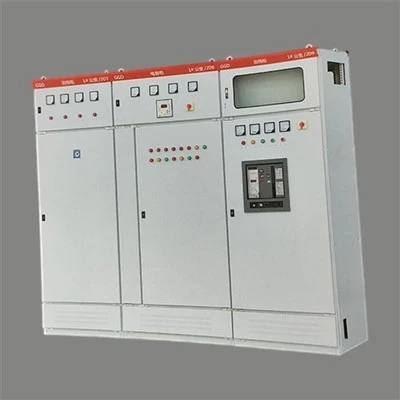
Distribution Box U.S. Department of Energy. (2021). Distribution Transformer Loss Reduction Opportunities. Office of Energy Efficiency and Renewable Energy.
IEEE Power & Energy Society. (2019). Transformer Design Optimization for Low Loss Operation. Transactions on Power Delivery.
National Electrical Manufacturers Association (NEMA). (2020). Standard for Distribution Transformers Efficiency Requirements.
Shijiazhuang Nuo’an Electric Power Equipment Co., Ltd.
As one of the most professional distribution transformer manufacturers and suppliers in China, we’re featured by quality products and good price. Please rest assured to buy advanced distribution transformer made in China here and get pricelist from our factory. Customized orders are welcome.
Address: NW Corner, Heping Rd & Xingsingsi St, North Baifo Village, Chang’an Dist, Shijiazhuang, Hebei, China
E-mail: nuoandianli3@163.com
WebSite: https://www.nuoanpower.com/
